


Genetics is a lot like receiving a book written in a language you were never taught. You can recognize a few letters, maybe even a handful of words, but most of the pages remain a mystery. And yet, that book shapes everything about us: our traits, our risks, the tiny biological decisions happening in our cells every second.
For me, this became real when a family member underwent genetic testing for a health concern. The result? A gene “variant of unknown significance”. It wasn’t clearly harmful, but it wasn’t harmless either. And as the next generation, I felt that gray zone too, the uncertainty, the unanswered questions, the sense that science hadn’t yet caught up. What did it mean for our family? Would future studies ever shed light on this mystery?
For years, that uncertainty was all anyone could offer: more questions, more waiting, more “we just don’t know yet.” But lately, something has started to shift. Advances in AI are giving scientists new ways to interpret genetic information that once felt out of reach. This emerging field, often called genetic AI, is reshaping how inherited risk is understood.
What once felt like a book written in a foreign language is slowly starting to make sense, letter by letter, pattern by pattern. For families navigating the unknowns of their own genetic stories, this shift could mean the difference between endless uncertainty and real answers.
In this blog, we’re going to explore how that shift is happening. How genetic AI is helping us read the complex language of genes, uncovering answers that were once hidden, and changing the way families understand their genetic stories.
Why Genetics Was So Hard to Understand
For a long time, genetics felt like trying to follow a story told in fragments. We could see the outcomes, children resembling parents, traits reappearing after years, but the cause stayed hidden. Something was clearly being passed down, yet there was no clear way to explain how or why it worked.
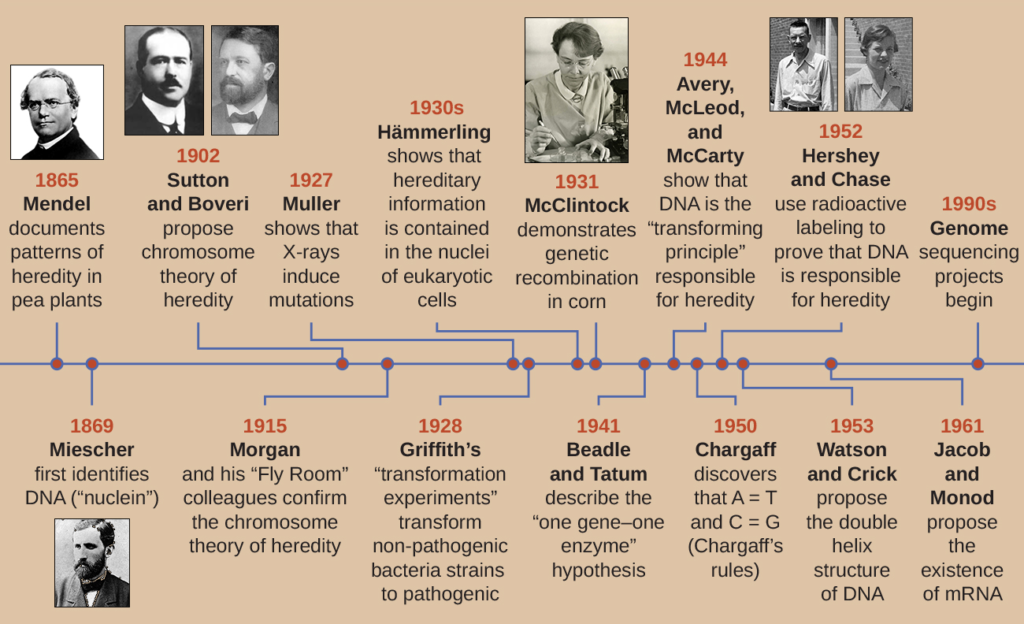
That changed in the 1800s when Gregor Mendel showed that inheritance followed simple, repeatable rules. His work laid the groundwork for genetics, even though it took decades to be fully recognized. In the early 20th century, scientists connected these rules to chromosomes inside cells.
By the mid-1900s, DNA was identified as the molecule carrying genetic instructions. As sequencing technologies improved through the 1980s and 1990s, researchers learned how to read DNA faster and at larger scales, leading to the Human Genome Project, completed in 2003.
Even after scientists could read the entire genome, many questions remained. Genes don’t work in isolation. They interact with each other, turn on and off, and behave differently depending on the situation. Studying one gene at a time wasn’t enough to explain how biology really works.
This gap between having genetic data and truly understanding it led to the rise of genetic AI. Instead of studying one gene at a time, researchers began using AI to look for patterns across thousands of genes at once.
Often described as AI in genomics, this approach treats the genome as a connected system, focusing on how genes interact rather than viewing each one in isolation. By doing this, AI can link genetic variations to disease, predict how genes behave, and help understand complex biological relationships. What once took years of careful analysis can now happen at a much larger scale, helping genetics move beyond raw data and toward real understanding.
This growing reliance on AI is also reflected in the expanding genomics market. Valued at $34.23 billion in 2025 and projected to reach $99.26 billion by 2034, it is driven in part by AI tools that speed up genetic analysis, improve accuracy, and support more informed research and healthcare decisions.
The Shift Towards Genetic AI
Genetics has always been complicated, not because the information isn’t there, but because we’ve never had a great way to interpret it. It’s like listening to someone speak a language you kind of recognize. You catch a few words, miss the rest, and hope you understood the meaning.
AI is becoming the translator we never had. It can read sequences that once felt confusing and spot patterns that humans would likely miss.
Take Evo 2 as an example. It doesn’t learn from words or images. It learns from DNA itself, taken from plants, animals, and humans. By studying huge amounts of genetic data, one starts to notice how different sequences behave. Over time, it builds a kind of familiarity, like someone who has listened to a language long enough to recognize certain phrases instantly.
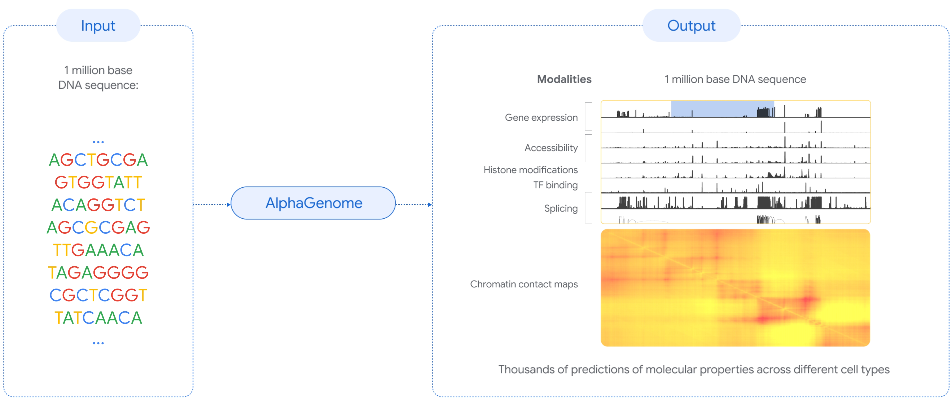
Other tools focus on interpretation rather than learning alone. AlphaGenome, for instance, helps researchers interpret genetic mutations. Some DNA changes are harmless, while others can lead to serious conditions. Sorting between the two has always been difficult. AI helps reduce that uncertainty by highlighting which mutations are likely important and which ones can be ignored.
AI is also changing how gene editing works. One of the best-known tools here is CRISPR, which lets scientists cut and modify DNA at specific sites, much like editing a sentence. AI helps guide CRISPR by suggesting better targets and reducing the risk of unintended changes. Scientists stay in control, but the process becomes faster and more careful.
Taken together, these advances point to a larger shift. What once looked like an unreadable code is starting to make sense. Genetic AI is helping researchers see patterns, make connections, and understand the genetic story in ways that weren’t possible before.
What Genetic AI Changes in Medicine
AI is starting to change how we think about medicine, making it more precise and more personal. The idea is simple. Instead of reacting after something goes wrong, doctors can spot risks earlier and choose treatments that actually fit the patient, not just the condition. This is one of the most practical outcomes of AI in genomics, where large-scale genetic patterns directly inform earlier diagnosis and more targeted care.
You can already see this shift in cancer care. In breast cancer treatment, tools like SOPHiA GENETICS’ AI platforms, developed in collaboration with AstraZeneca, help doctors predict which therapies are more likely to work for specific patients. By looking at genetic data along with scans and medical history, AI helps move away from trial and error and toward treatment plans that are tailored from the start.
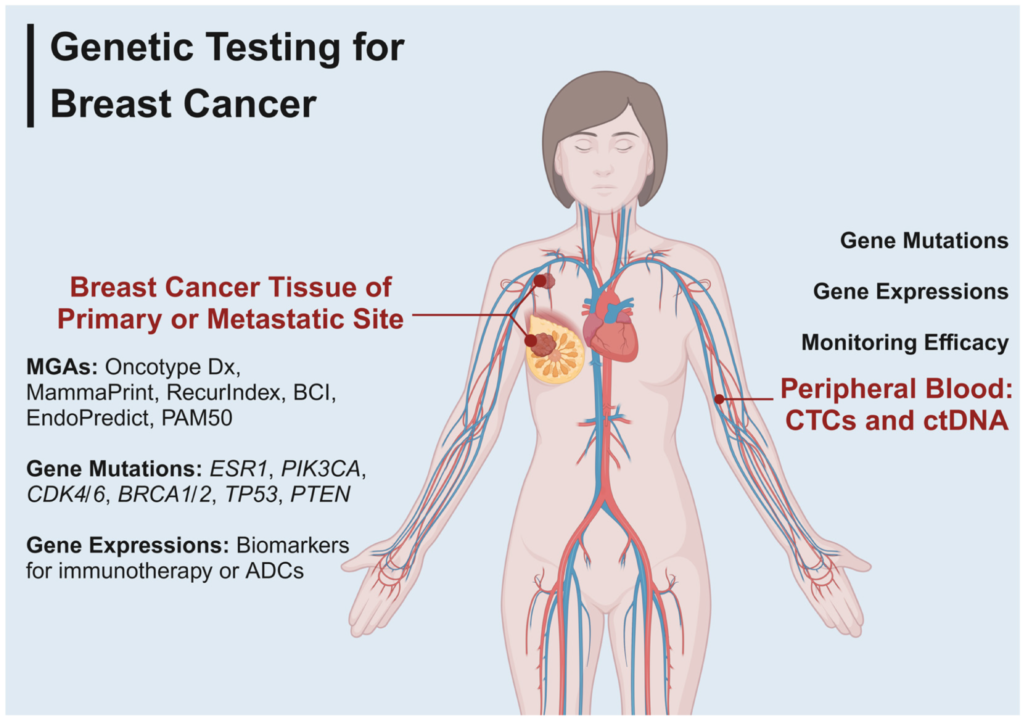
The same approach is helping make gene therapies safer. Researchers at places like Sheba Medical Center, working with Nvidia, are using AI models trained on large genetic datasets to design therapies that focus only on the affected cells. This reduces the chances of unwanted changes and lowers side effects, which has always been one of the biggest concerns in gene-based treatments.
AI is also opening new paths for people with rare diseases. Many of these conditions are hard to diagnose because the genetic signals are subtle or scattered. AI can highlight genetic variations that might otherwise be missed, helping doctors finally connect the dots and offer answers where there were none before.
Even brain research is benefiting. Scientists at USC used AI to map the corpus callosum, the structure that connects the brain’s two hemispheres, and link its shape to genetic factors. This kind of work helps researchers better understand conditions like ADHD or bipolar disorder and speeds up research that once took years.
Genetic AI Beyond Humans
Genetic AI is no longer limited to labs and clinics. Together, they’re influencing everyday systems that affect the planet, from agriculture to conservation to healthcare. Here are some real-world examples of how this shift is playing out.
- Smarter crops, less struggle: Breeding better crops usually means years of trial and error. AI changes that by scanning entire plant genomes at once, instead of hunting for one gene at a time. Companies like Avalo use this to spot traits linked to drought resistance, low water use, and reduced fertilizer needs. Plants like sugarcane, cotton, and broccoli are getting tougher without extra effort from farmers.
- Cancer vaccines made to order: Instead of one-size-fits-all treatments, genetic AI is helping design cancer vaccines around a person’s tumor. At Russia’s Gamaleya Center, genetic data from melanoma cells is used to create personalized mRNA vaccines. The immune system gets a custom “most-wanted” list, and the whole process can take just days, not months.
- A comeback story for rare birds: In New Zealand, genetic AI is helping bring birds like the kākāpō and takahē back from the edge. Genetic data helps manage tiny populations without increasing inbreeding, while AI-powered tools track predators and protect habitats. It’s slow, careful work, but it’s helping these birds reclaim their place in the wild.

The Other Side: Where Genetic AI Raises Ethical Questions
So far, artificial intelligence and genetics sound promising and reassuring. But there is another side to this story, and it starts with a simple reality: the technology is advancing faster than our shared rules, ethics, and understanding of where the limits should be.
This becomes most visible in embryo screening. Companies like Nucleus use AI to analyze embryos for genetic risks with the intention of avoiding severe inherited diseases to reduce preventable suffering before a child is even born.
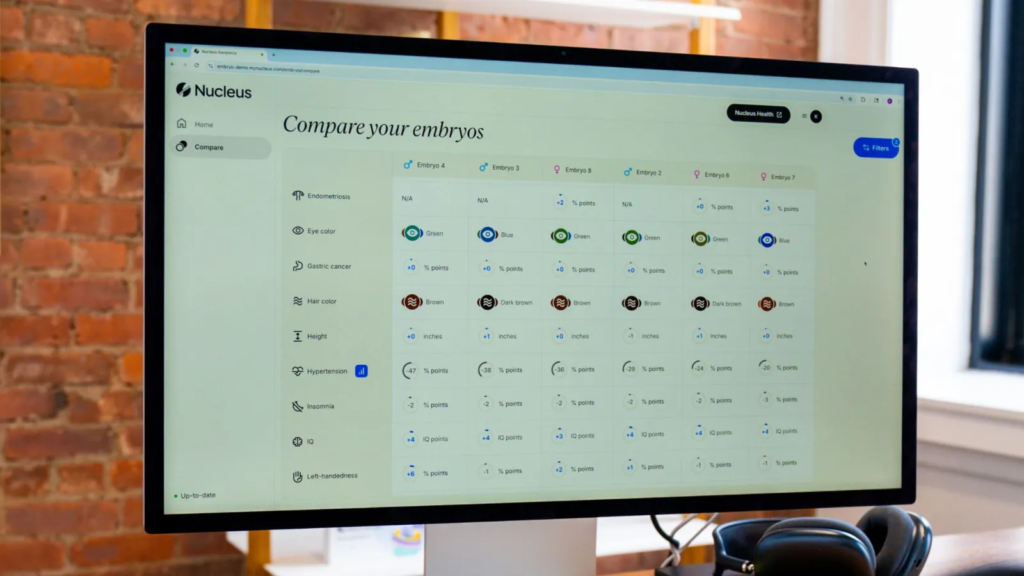
The line begins to blur when screening moves beyond single-gene disorders. These systems can look at thousands of genetic signals at once and estimate the chances of conditions like heart disease, mental health disorders, or other long-term risks. These estimates are not guarantees, but once parents see them, they naturally influence which embryos are chosen.
Avoiding a life-threatening illness feels like medicine. But when decisions start to rely on probabilities or traits that fall into a grey area, the focus shifts. It is no longer just about health. It becomes about choosing between possible futures.
Access adds another layer to the problem. These technologies are costly and not equally available. If only some families can reduce genetic risk or optimize outcomes, genetic risks become a new form of inequality shaped by money rather than biology.
The real concern here is not futuristic disasters or rogue machines. It is more subtle as AI is making genetic decisions faster than our ability to debate their consequences. By the time those conversations catch up, many of these choices may already be part of everyday life.
The Line AI Can’t Draw for Us
If AI can read our genes, predict risks, and even suggest changes, where do we draw the line?
AI can analyze DNA at a scale no human ever could. It can flag disease risks, study embryos, highlight mutations, and reveal patterns that were once impossible to see. It is fast, powerful, and increasingly precise.
What it cannot do is tell us what is right.
AI cannot decide where treatment should stop and choice should begin. It cannot tell us which risks are worth acting on, which traits should never be selected for, or who should have access to these tools. Those are not technical problems to be solved. They are human decisions.

This becomes clearest in moments of uncertainty. Families who receive unclear genetic results, such as a variant that cannot be labeled as harmful or harmless, are left in a grey area that no model can resolve. More information does not always mean clearer answers.
That is why human judgment still matters. AI can show us what is possible and help make genetic science safer and more precise, but deciding how far to go, where to stop, and how to stay fair is still our responsibility. Technology may move quickly, but reflection has to move with it.
This article was contributed to the Scribe of AI blog by Shivani Sharma.
At Scribe of AI, we spend day in and day out creating content to push traffic to your AI company’s website and educate your audience on all things AI. This is a space for our writers to have a little creative freedom and show-off their personalities. If you would like to see what we do during our 9 to 5, please check out our services.
