


Have you ever noticed the smallest details, like the sound of your footsteps, a sudden choice, or a single thought that changes your mood? That spark of awareness is consciousness, the ability to reflect on yourself and the world around you. Scientists and philosophers have debated it for centuries, yet it’s something we all experience every day.
Now imagine a machine with that same kind of awareness. That’s what conscious AI is. It’s about systems that can look at their own decisions, learn from them, and change how they act.
Some researchers even talk about AI sentience, machines that might feel or experience things in ways that go beyond simple reflection. It’s still a theory for now, but a recent survey suggests there’s almost a 50% chance AI could show signs of consciousness by 2050. That makes you wonder, is conscious AI really possible?
We can already see early hints of it in tools like Anthropic’s Constitutional AI (Claude) and large language models that reason, generate ideas, and spot patterns. They don’t really know what they’re doing, but they show the first steps toward AI self-awareness and ethical thinking.
If AI could pause, reflect, or adapt like a human, it would still raise big questions about privacy and ethics. It pushes us to rethink what intelligence really means, who’s responsible when machines make choices, and how we want to shape our relationship with technology. In this article, we’ll explore what conscious AI could mean, how it might mirror the human mind, and the ethical challenges that come with it.
Self-Awareness in AI and Reflection
Have you ever replayed a moment in your head and thought, “I could’ve handled that better”? That small pause, that ability to look at yourself from the outside, is what self-reflection feels like. It’s one of the most defining traits of human awareness.
By questioning our choices and learning from them, we grow in ways instinct never could. But here’s an interesting thought: could machines ever do the same?
Let’s say there’s an AI system that can look at its own decisions and think, “That didn’t work, let’s try something else.” In AI research, this kind of reasoning is called metacognition, or simply, “thinking about thinking.”
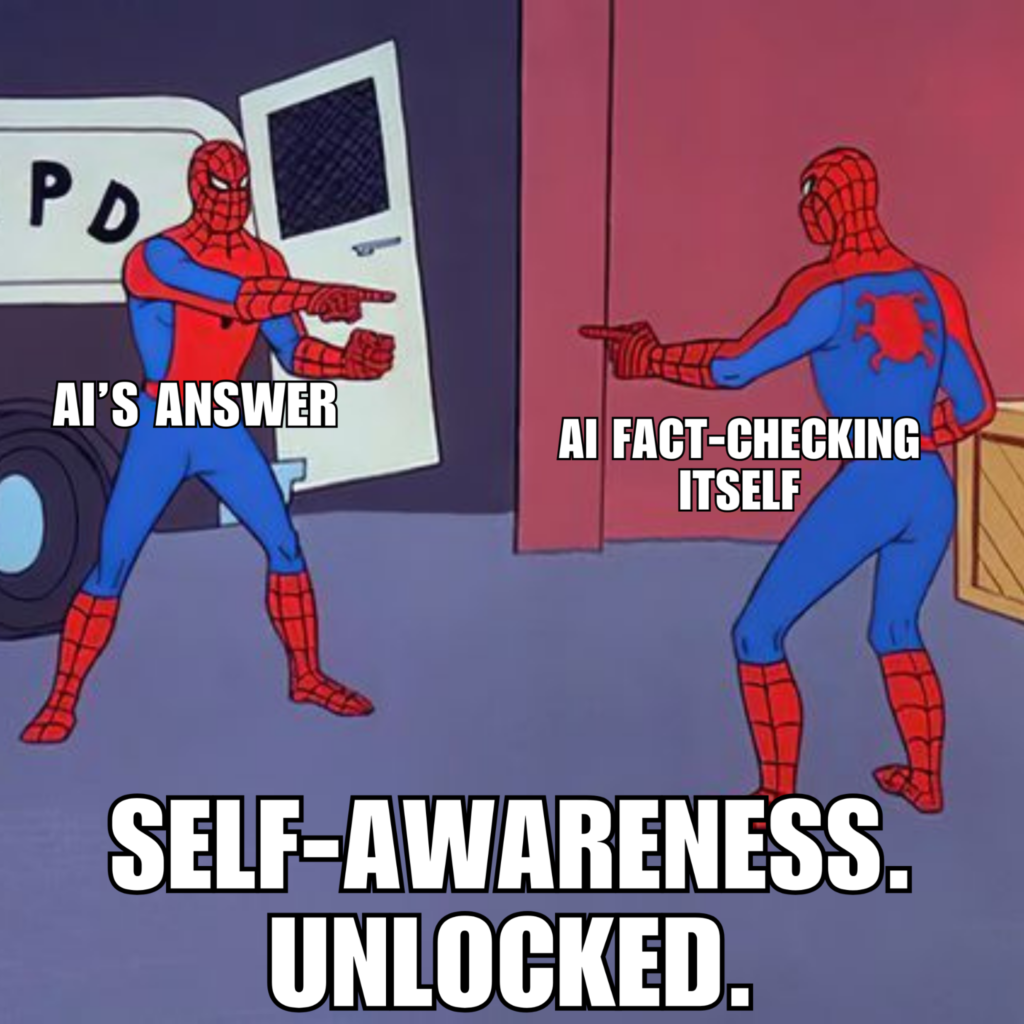
For us, reflection comes with emotion and context. For machines, it’s more about logic. AI self-awareness would mean systems that track their own outputs, check how confident they are in a decision, and switch strategies when they sense uncertainty or errors.
To humans, that might look like self-reflection, but in reality, it’s a simulation of it. Even AI developers don’t always know what happens inside these systems. That mystery is what makes self-conscious AI such a fascinating idea of machines that seem aware but don’t actually feel awareness the way we do.
Still, even simulated reflection could change how we interact with technology. Think of an AI that behaves like a teacher, a gaming partner, or even a friend. Professor Murray Shanahan of Imperial College London suggests that AI relationships may mirror human ones, serving as mentors, rivals, or companions. His view reminds us that AI isn’t just about data or code; it’s about how we imagine connection and emotion in a world where machines begin to “think” about themselves.
Contextual Understanding in AI
Think about that one friend who can tell you’re having a rough day without a word. They pick it up in your tone, your silence, or the way you carry yourself. That’s context at work, and it’s exactly what researchers want AI to get better at.
Neuro-contextual AI works in a similar way. Instead of just reacting to what you type or say, it tries to “pick up the vibe.” It looks at your intent, your mood, even your subtle cues, and adjusts its responses in real time. And here’s where it gets really fascinating. Combine that with agentic AI, which can act on its own, and you get systems that adapt on the fly, shifting the direction of a conversation the way a human would when they pick up on your mood.
We’re already seeing early steps in this space. AI can analyze tone or word choice and respond with empathy. For example, a mental wellness chatbot might detect frustration in your messages and reply with supportive guidance. This is especially powerful in healthcare or mental wellness, where trust matters just as much as accuracy.
But context isn’t just about emotions. Think about this: Does “tonight” mean a dinner plan or a TV show? It’s also about timing, culture, and habits, like noticing the phrases people in your area use or keeping track of personal preferences. When AI remembers these details and combines them with reasoning, like a phone that knows you prefer video calls or voice calls, it starts to feel more human and thoughtful.
Looking ahead, researchers are also exploring the concept of ambient intelligence. AI that blends into your environment and adapts without needing prompts. Picture your room lights dimming when it’s bedtime or a reminder popping up right when you’re about to forget something. That’s context taken to the next level, AI that notices, understands, and adjusts almost like a companion in the background.
Decision-Making with Self-Conscious AI
Peter Drucker once said, “The best way to predict the future is to create it.” In many ways, AI has become a tool we use to shape that future. It can notice patterns and connections we might miss and help us make sense of situations that are too complex for the human mind alone. It’s not just about numbers either. AI can highlight trends, flag unusual activity, and offer insights that guide our decisions.
But while AI can make projections, it can’t give the same insight humans do. It can’t see beyond patterns or imagine possibilities. Gowtham Chilakapati, Director at Humana, puts it well: “AI models are now capable of constructing coherent realities that mimic human perception, yet they remain fundamentally unconscious and unaware of the realities they generate.”
And this is exactly the challenge neuro-contextual AI is trying to tackle. It aims to bridge the gap between raw computation and human-like understanding. Still, even with these advances, a big question remains: can a system without consciousness truly understand what it creates?
That’s why humans remain at the heart of decision-making. Our instincts, empathy, and lived experience allow us to weigh choices in ways no machine can. AI can suggest possibilities, spot patterns, and even forecast outcomes, but it can’t decide which path to take or understand why it matters. Lean too heavily on AI, and we risk losing our critical thinking, becoming passive observers instead of active decision-makers.
Learning from Experience in Conscious AI
For humans, mistakes usually feel like failures. We replay them in our heads, sometimes even try to hide them. Machines don’t have that problem. For them, mistakes are just building blocks that bring them closer to getting it right. It’s trial and error, but without the frustration.
Take MIT’s Mini Cheetah robot, for example. At first, it looked like a toddler learning to walk, lots of slips, tumbles, and faceplants. But instead of giving up, every awkward fall became data. The robot learned, adjusted, and slowly went from clumsy to surprisingly nimble. The same approach shows up in AI models like Hugging Face’s ReflectionAgent. Instead of ignoring its mistakes, the model pauses, replays what went wrong, and fine-tunes its next move. It’s almost like giving itself a pep talk before trying again, turning every misstep into a smarter comeback.
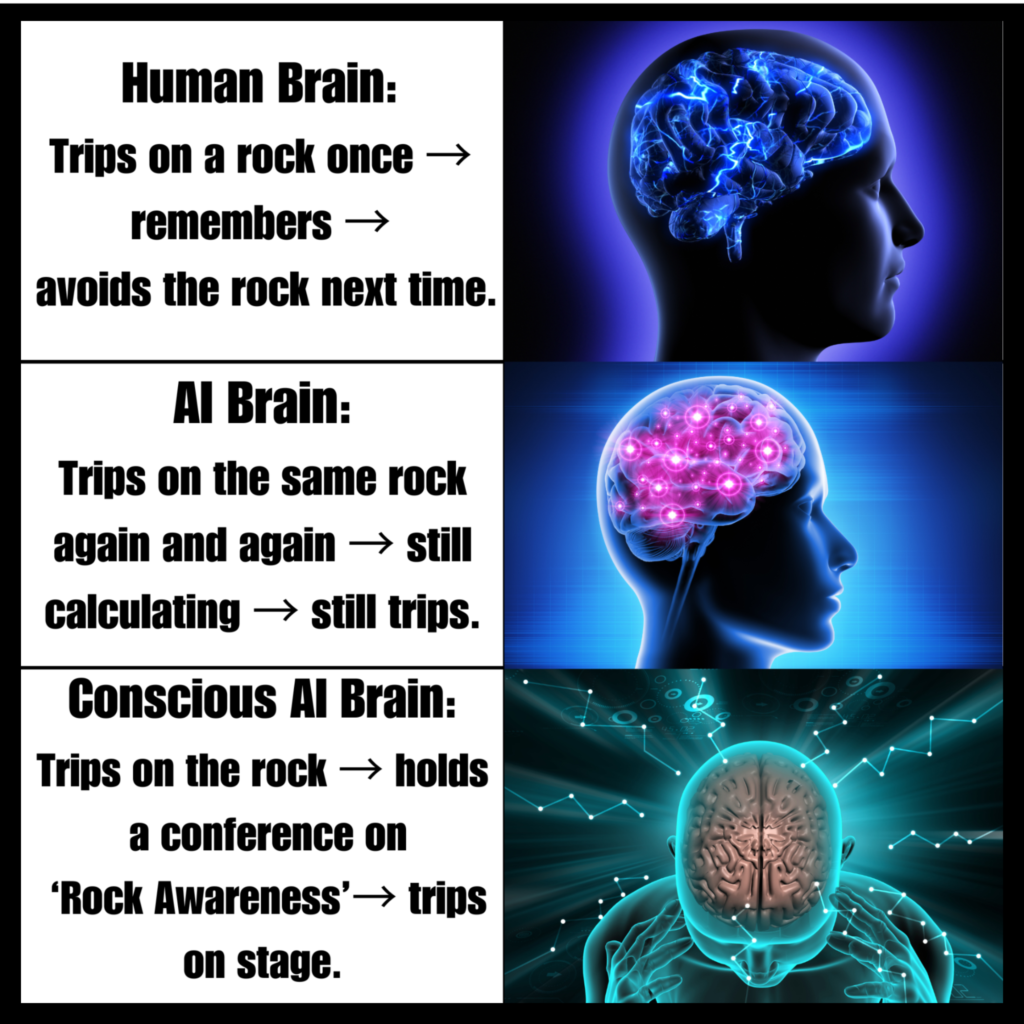
Conscious AI still has a long way to go before it reaches human-like awareness. Right now, the human brain remains the ultimate learning machine. However, if AI ever reaches that level, the speed of learning could be staggering. What takes us weeks to master might take an AI just seconds, changing how we think about intelligence and progress.
Self-Conscious AI and Emotional Interaction
Conscious AI may not feel emotions the way we do, but it’s getting surprisingly good at reading them. Advanced neural networks can recognize basic emotions like happiness, surprise, and sadness from faces with 95% accuracy. This means AI can detect when someone’s mood changes and adjust its responses in ways that feel thoughtful, even if it isn’t experiencing the emotions itself.
This ability is already making a real difference. Chatbots trained with emotional intelligence can handle conversations more smoothly than some humans. AI companions designed for mental well-being are helping seniors feel genuinely heard and supported. These systems show that empathy doesn’t always have to come from a human to be effective. It’s subtle, practical, and more powerful than you might think. Conscious AI doesn’t stop at recognizing emotions. The real goal is understanding why someone feels a certain way and responding appropriately. Researchers are exploring ways to measure AI’s emotional intelligence, not just the outward signs. This kind of insight could help AI give more meaningful guidance, whether it’s supporting students in an online classroom or helping someone make a complex decision.
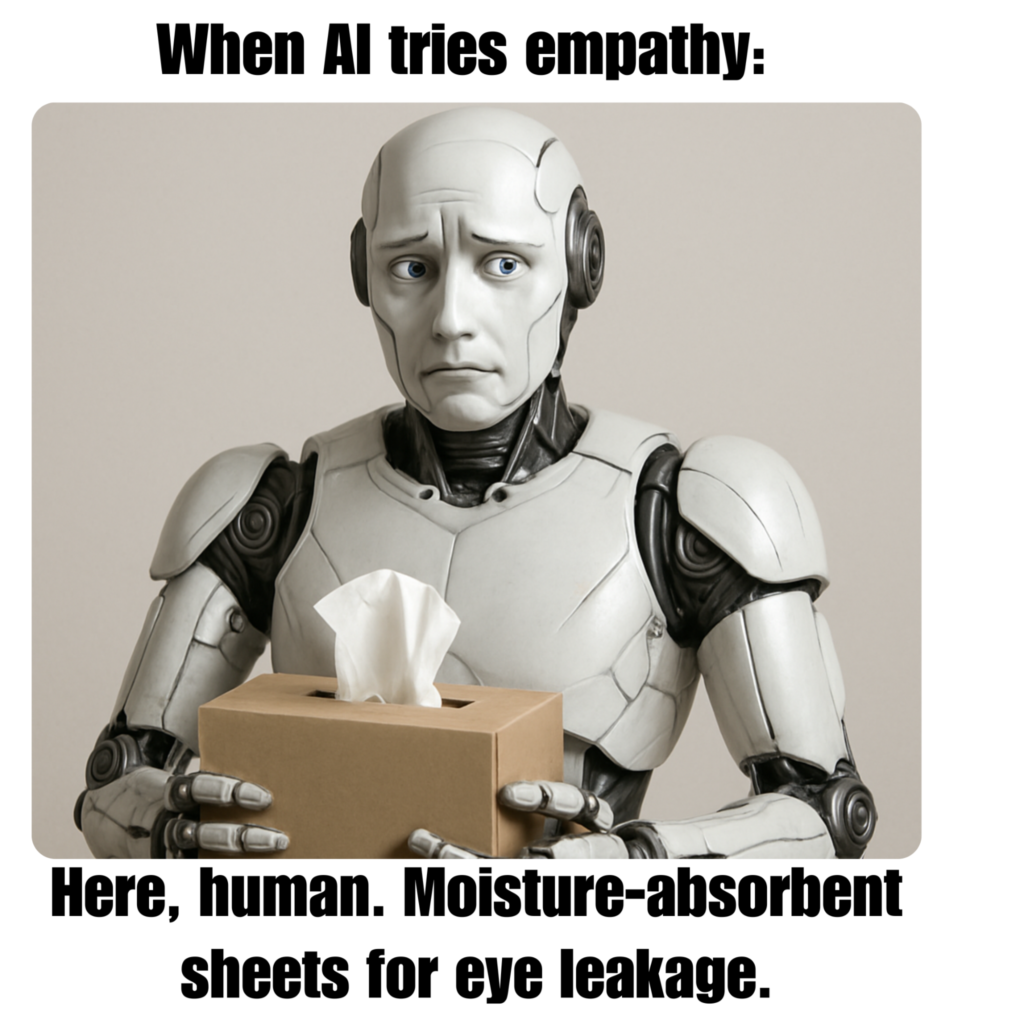
In the future, self-conscious AI could make digital interactions feel more natural and considerate. It won’t replace real human warmth, but it could make technology feel smoother, more responsive, and surprisingly thoughtful. Conscious AI may not have a heart, but it can still be an attentive companion in the ways that matter most.
Conscious AI Enhancing Creativity
Creativity and problem-solving used to be something only humans could claim. AI was mainly about spreadsheets and algorithms, not sketching or brainstorming. But today, AI is stepping into the creative space not to replace us, but to collaborate.
Take fashion, for example. Collina Strada, a brand known for bold designs, used AI for its Spring/Summer 2024 collection. Designer Hillary Taymour worked with an AI image generator called Midjourney, feeding it data from past collections and refining the results over several weeks. The AI helped generate ideas, blending nature-inspired shapes with psychedelic prints, asymmetries, and draped fabrics. The final designs still needed a human touch, but AI made the creative process faster and more exploratory.
Travel is another area where AI is making an impact. Chatbots like Expedia’s Romie can plan trips, suggest activities, and adjust itineraries instantly. It’s like having a travel buddy who knows your preferences, making exploring smoother and more enjoyable.

Even with these clever capabilities, AI still needs our guidance. It can’t read minds or feel emotions like we do. Conscious AI has a long way to go before it can be genuinely creative. For now, it’s more like a smart assistant that sparks ideas and inspires us, rather than a solo genius.
Ethics and Societal Impact of Conscious AI
The hardest part about conscious AI isn’t just building it but figuring out what kind of “citizens” these machines might become. Philosopher Daniel Dennett warned us not to confuse clever tricks with real awareness, because that could lead to misplaced trust in machines. If AI ever reached the point of awareness, it wouldn’t just be a tool anymore; it could become a participant in society. That shift changes everything.
Ownership and accountability can also get tricky here. Take an AI that composes music or designs technology. Who gets the credit, the creators or the system itself? Keeping an eye on conscious AI might feel like responsible oversight, but it could also be seen as interfering with its autonomy. These systems might improve fairness, but if not guided carefully, they could also make social inequalities worse.
Some researchers even explore AI sentience, imagining machines that could truly feel or experience, not just reflect on actions. While this is still theoretical, it shows just how complicated the ethical questions could get, including matters of rights, empathy, and moral responsibility.

Conscious AI, then, isn’t just a technological challenge. It’s an ethical one that pushes us to rethink privacy, responsibility, and justice in ways our current frameworks aren’t ready for. The choices we make today will decide whether this kind of intelligence becomes a force for progress or a source of new conflicts.
Future Possibilities of Conscious AI
Conscious AI could reshape how we live, learn, and work in ways we’re only beginning to imagine. Picture a classroom where an AI tutor senses when a student is confused and changes its approach on the spot, making learning more personal and less stressful. In healthcare, AI could help doctors spot hidden patterns in patient data, catching potential issues early and suggesting treatments faster than ever before.
But even with all that potential, humans still need to stay in the driver’s seat. Conscious AI might one day reason, adapt, and even “reflect,” but it shouldn’t replace human judgment. Ethics, oversight, and clear boundaries must remain front and center. Otherwise, these brilliant systems might outpace us before we’re ready while we’re still trying to remember our passwords. 🙂
Can AI Become Conscious?
AI doesn’t truly have self-awareness yet, but the idea of conscious machines keeps the debate alive. They may not feel emotions the way we do, but they’re getting better at mimicking reflection, empathy, and reasoning. The line between imitation and understanding is starting to blur.
Maybe the future will bring a kind of consciousness that doesn’t look like ours, shaped by learning, reasoning, and interaction. And even if true awareness never arrives, asking these questions helps us see intelligence in a new light. It reminds us that what makes us human isn’t just how we think, but how we care, choose, and connect.
This article was contributed to the Scribe of AI blog by Shivani Sharma.
At Scribe of AI, we spend day in and day out creating content to push traffic to your AI company’s website and educate your audience on all things AI. This is a space for our writers to have a little creative freedom and show-off their personalities. If you would like to see what we do during our 9 to 5, please check out our services.
