


What if the best code isn’t carefully written line by line, but instead naturally felt and expressed? This concept, often referred to as vibe coding, reflects a fresh shift in modern programming practices.
Instead of only following strict syntax, vibe coding highlights intuition and flow as central parts of development. Developers often describe it as similar to music or art, where creativity guides each natural decision.
The rise of AI tools has made this approach possible and accessible for more programmers everywhere. AI copilots, such as GitHub Copilot and Replit Ghostwriter, provide instant code suggestions that maintain continuous creative flow.
No-code platforms also make it easy for beginners to quickly turn ideas into real software solutions. Collaboration platforms allow teams to stay aligned and focus more on solving problems than handling technical barriers. In this blog, we will explore what vibe coding is, its significance, and its future implications.
What is Vibe Coding?
Vibe coding is best understood as a style of programming that blends logic with creativity and flow. It moves away from treating code as only mechanical instructions and instead treats it like a living language.
The focus is on rhythm in thinking and allowing intuition to guide the natural development of a solution. This makes the act of coding similar to how a musician improvises melodies during a live performance.
Just like music, vibe coding relies on timing, rhythm, and instinct rather than only planned precision. It is also like an artist sketching ideas, where shapes evolve freely before taking on complete forms.
These comparisons show that programming can be more expressive, opening new ways to think about technology creation. This approach is now relevant because technology tools are finally mature enough to support such a creative flow in coding.
AI copilots suggest lines instantly, real-time editors allow constant feedback, and collaborative platforms keep developers in sync. Together, these advancements make vibe coding not only possible but also a mainstream way of building software today.
The Path to Vibe Coding
The idea of vibe coding became possible through steady progress in AI. Early programming relied on fixed rules and manual coding. Later, machine learning introduced pattern recognition, which improved automation but required structured data. Deep learning brought advanced models that could process natural language and context.
The development of large language models made it possible for AI to understand prompts, generate code, and support real-time collaboration. Today’s AI-assisted tools build on this history, offering developers a practical way to merge human creativity with machine efficiency in everyday coding tasks.

How Vibe Coding Works?
Vibe coding is a process where ideas flow directly into working code with the help of AI. It blends natural language input, instant code generation, and human guidance.
Here’s an overview of how vibe coding works:
- Idea Input: Developers share requirements in plain language, prompts, or simple sketches. The focus is on describing intent, not syntax.
- AI Code Generation: The AI interprets the input and produces functional code. It draws from its trained models to match logic, structure, and best practices.
- Human Review: Developers check the generated code for correctness, security, and alignment with the project’s goals.
- Refinement Loop: AI suggests alternatives or improvements, while humans adjust logic, optimize performance, or add domain-specific details.
- Prototype to Build: The reviewed code evolves into a working prototype and can be scaled into production-ready applications.
The Rise of Flow-State Programming
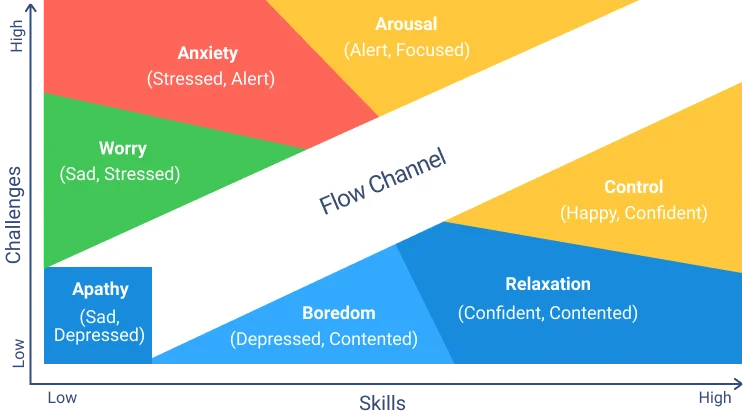
You may have heard the phrase flow state. It describes a state of complete focus, where work feels effortless and natural. Research indicates that individuals in a flow state often experience significant increases in productivity and creative output.
Developers are no different. Many already say they can feel the code when they reach this state. In those moments, the code almost writes itself. Problems seem clearer and solutions appear more naturally.
The rise of new tools has made it easier for developers to achieve and sustain a flow state. GitHub Copilot, Cursor, and Replit Ghostwriter give instant suggestions that reduce interruptions and keep the mind engaged.
Instead of stopping to search for syntax or errors, developers stay focused on their main idea. This keeps the momentum going. Each small piece of feedback builds confidence and further strengthens the coding rhythm.
The act of programming starts feeling less like typing rules and more like having a conversation with technology. This change is significant because it indicates that coding is evolving toward a more intuitive and human-centered approach.
On the Ground with Vibe Coding
Vibe coding has already influenced real-world software development in measurable ways, especially with the rise of AI copilots. A study published by GitHub in 2023 reported that developers using Copilot completed coding tasks up to 55 percent faster.
The same research highlighted that 88% of developers felt more satisfied with their workflows when assisted by AI. These findings indicate that AI-driven support systems not only accelerate delivery but also improve overall developer experience and confidence.
In 2025, this effect became even more visible in the workplace of Notion, a $10 billion productivity software company. A report described how non-technical staff utilized AI tools like Cursor and Claude to contribute to code actively.
Within a matter of hours, participants were able to implement user interface changes and small application features independently. This case demonstrates how vibe coding lowers the entry barrier, enabling non-programmers to engage in product development directly.
Another notable example is Base44, a natural language coding startup launched in late 2024, which scaled rapidly in 2025. The platform enabled users to describe applications in plain language and have AI automatically generate functioning prototypes.
By June 2025, Base44 had attracted more than 100,000 users worldwide. These examples demonstrate how vibe coding has transitioned from an experimental concept into a commercially viable method of software creation.
What Can You Build With Vibe Coding?
One of the biggest questions readers will have is this: “Okay, but what can I actually build with vibe coding?”
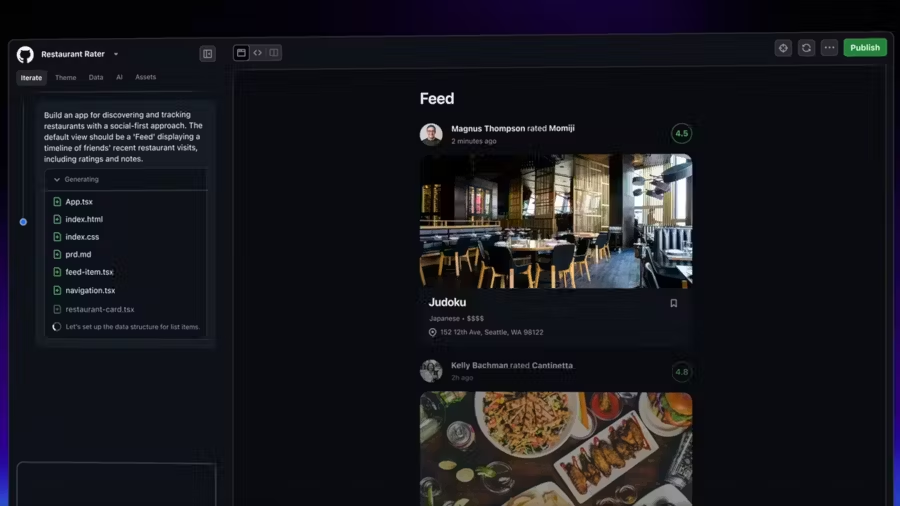
Whether you’re a non-technical founder, a designer with ideas, or a developer looking to speed up work, vibe coding tools let you turn plain language instructions into working apps, dashboards, websites, automations, and more.
You don’t need to hand-code every line. You talk to the AI, refine as it goes, and launch things faster. Next, let’s discuss some real-life cases and examples to consider.
A Look at Lovable.ai
Lovable is one of the most talked-about names in the vibe coding space today. It allows users to build full apps and websites simply by instructing the system in natural language. Lovable has seen rapid growth in a short time. Reports suggest the company has raised $200 million at a valuation of $1.8 billion. It also launched Lovable 2.0, which introduced a “chat mode agent” for planning and collaboration, along with stronger security features.
With Lovable, people have already built a wide range of projects. Tutorials guide users through creating a food delivery app with simple prompts. Others have built habit trackers in minutes or even cloned popular apps like DocuSign. These examples highlight how quickly ideas can move from concept to reality with vibe coding tools.
Security is another area in which Lovable continues to improve, especially for projects that handle sensitive data. Lovable’s journey shows how vibe coding can scale from playful experiments to serious applications, making it a strong example of this movement in action.
Other Vibe Coding Examples and Use Cases
Here are some other companies that are shaping the way vibe coding is used today:
- Dreambase: Extends backend features from Supabase with AI-driven frontends, demonstrating how traditional platforms can integrate with Vibe coding.
- Bolt.new: Provides an AI-first coding environment where users can create projects through natural prompts.
- Cursor: Offers an AI-powered code editor designed to blend standard programming with conversational coding.
- Replit: Combines its cloud coding platform with vibe coding techniques to enable users to build full-stack web apps, including authentication and databases, in a fraction of the usual time.
Many creators rely on these tools for prototypes and MVPs, helping them validate ideas quickly before investing in custom development. They are also popular for creative projects, such as interactive portfolios, animated micro-apps, or storytelling experiences, where both functionality and “vibe” are important.
Benefits of Vibe Coding
Vibe coding enables faster, more interactive, and idea-driven software development. It allows developers to focus on problem-solving while AI handles repetitive tasks.
Here are some other key advantages of vibe coding:
- Faster Development: AI can generate code in real-time from ideas, reducing the time spent on writing boilerplate code. This helps teams move quickly from concept to working software.
- Improved Collaboration: Developers and AI can work together in shared coding environments, making it easier to brainstorm, test, and refine solutions as a team.
- Enhanced Creativity: By automating routine coding, AI frees developers to explore new approaches, experiment with features, and focus on design and logic.
- Lower Learning Barrier: New developers can contribute ideas without needing to master every syntax detail, making coding more accessible and reducing onboarding time.
- Efficient Prototyping: Vibe coding enables the rapid testing of multiple solutions, helping teams identify the best approach more quickly and iterate more effectively.

Challenges of Vibe Coding
Even though vibe coding brings speed and creativity, it also introduces several risks and limitations. Here are some challenges to consider:
- Over-Dependence on AI: Developers may begin to rely too much on AI copilots for code suggestions. Over time, this reliance can diminish the need to learn more advanced programming concepts and weaken problem-solving skills.
- Shallow Understanding of Code: When code is generated mainly through flow and suggestions, some users may not fully grasp the underlying logic. This gap becomes a risk when projects demand optimization, scaling, or advanced debugging.
- Ethical and Accountability Issues: AI can sometimes generate faulty or biased output, and the responsibility is often unclear. Such uncertainty raises difficult questions about accountability in production environments.
- Need for Balance: Vibe coding works best when combined with structured practices. Developers must balance creativity with careful validation and systematic review.
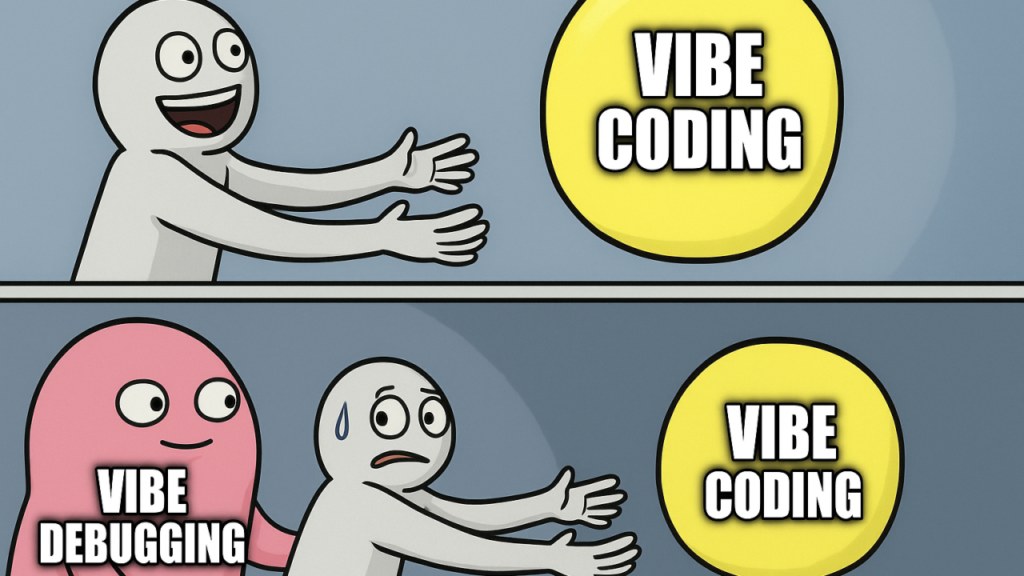
- Complex Debugging: Intuition-driven coding can lead to messy or unclear code structures. When issues appear, debugging such projects becomes more difficult, especially in collaborative settings.
Future of Vibe Coding
The future of vibe coding is likely to be shaped by deeper collaboration between humans and AI systems. Instead of focusing heavily on syntax and boilerplate, developers may increasingly work in environments where ideas are quickly transformed into functional code by AI assistants. This could make coding sessions feel more like interactive problem-solving discussions than traditional programming.
Workplaces may adopt gamified or collaborative platforms to encourage experimentation, where teams contribute ideas while AI provides real-time implementation. Such an approach can reduce time spent on repetitive tasks, allowing developers to focus on design, logic, and creativity.
Over time, vibe coding could become a standard practice for prototyping, brainstorming, and accelerating development cycles. By combining intuition with machine support, it provides a way to bridge creativity and efficiency, making software development more accessible and streamlined without replacing the core role of human decision-making.
Conclusion
Vibe coding makes programming simpler and more focused on ideas. Developers can explain what they want, and AI can produce the first version of the code instantly. This allows teams to move from concept to testing much faster.
The approach reduces the time spent on repetitive work and creates more space for problem-solving and design. Developers still guide the process, but they do not need to write every line of code. Vibe coding combines human creativity with AI assistance in a balanced way, helping teams build software that is efficient, practical, and closer to user needs.
This article was contributed to the Scribe of AI blog by Aarthy R.
At Scribe of AI, we spend day in and day out creating content to push traffic to your AI company’s website and educate your audience on all things AI. This is a space for our writers to have a little creative freedom and show off their personalities. If you would like to see what we do during our 9 to 5, please check out our services.
